
What is stop loss?
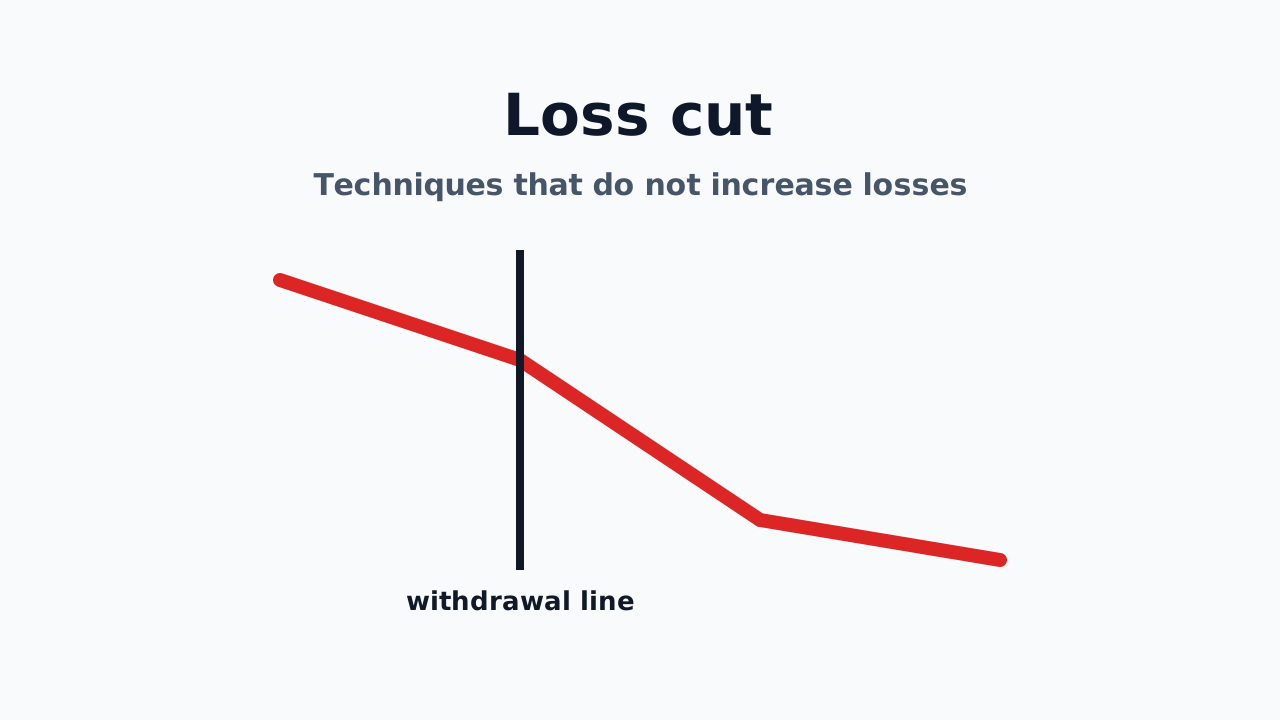
Loss cutting is the act of selling a stock with an unrealized loss and fixing the loss.
For example, if you buy a stock for 100,000 yen and sell it when it reaches 80,000 yen, you will incur a loss of 20,000 yen.
Although it is psychologically painful because it involves acknowledging the loss, it has the effect of limiting the loss.
Why is loss cutting necessary?
In investing, not all decisions are correct.
The important thing is not to incur too much loss if you make a mistake.
If you don't cut your losses, you're likely to end up in the following situations:
- Unrealized losses become larger
- funds become immobile
- Inability to make calm decisions
- Increase the risk further with Nanping
How to create a stop loss rule
Beginners should decide on the rules before buying. If you think about it after the fact, you will inevitably be less judgmental.
Examples include:
- Sell at what percentage below the purchase price
- Sell when it breaks below important support levels
- Sell if the reason for investing disappears in financial results.
- Determine the loss limit for the entire portfolio
Points to note
Cutting losses does not mean selling everything right away.
If you get too influenced by short-term price movements, you may end up cutting your losses.
It is important to create rules that suit your investment period and reason for investing.
Summary
Loss cutting is risk management to survive investing.
It is easier to use if you think of it as a technique for not increasing losses, rather than a technique for avoiding losses.