Characteristics of people who cannot save money
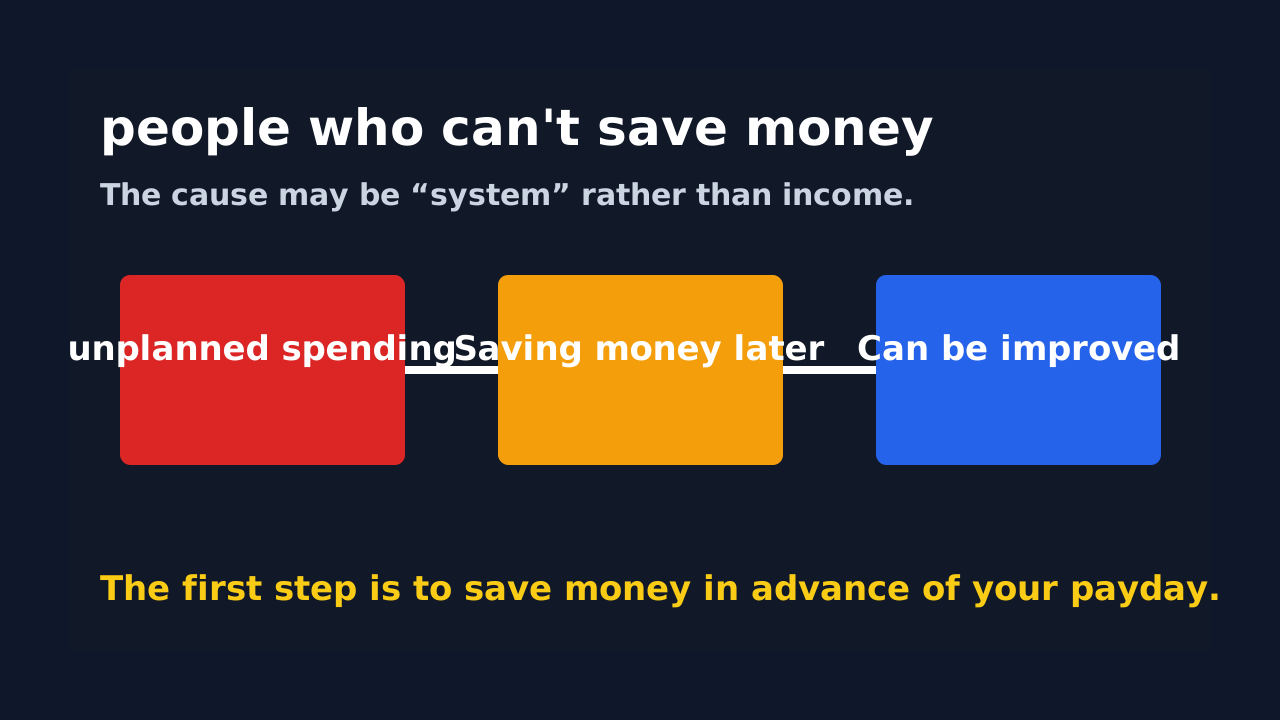
There are some common behaviors among people who can't save money.
Each one is a small thing.
However, if this continues every month, the difference will be quite large over the course of a year.
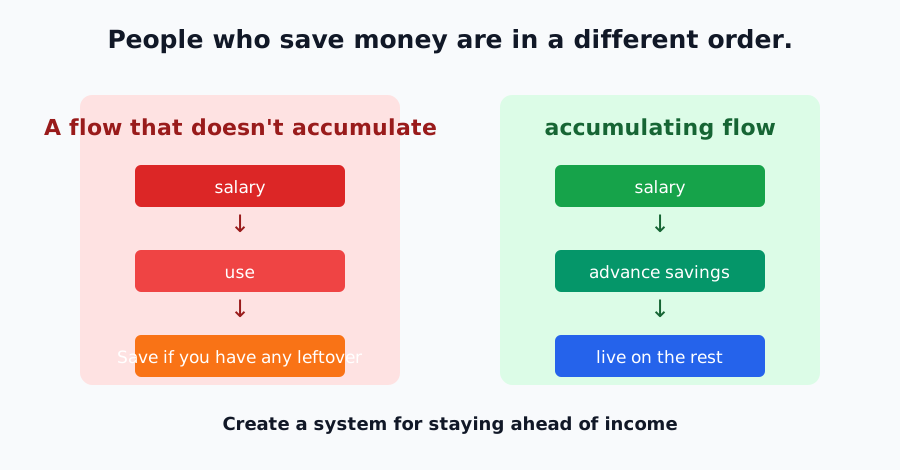
1. Think about saving whatever you have left.
This pattern is the most common.
salary
↓
living expenses
↓
Hobbies/Eating out/Shopping
↓
Save if you have any leftover
With this flow, there is usually not much left over.
This is because when people have money in their account, they tend to feel like they can still use it.
For those who save, the order is reversed.
salary
↓
advance savings
↓
live on the rest
Even if you just transfer 30,000 yen each month to another account, it will cost you 360,000 yen per year.
Even 10,000 yen is fine at first.
The important thing is automation, not spirit.
2. Not keeping track of expenses
"I don't know what it was used for, but for some reason it's decreasing."
In this state, it becomes difficult to save money.
The following expenses are particularly easy to overlook:
- Convenience store
- cafe
- Eating out
- subscription
- App billing
- Taxi/Delivery fee
For example, even if you spend 500 yen every day at a convenience store, it will cost you about 15,000 yen per month.
500 yen × 30 days = 15,000 yen
15,000 yen × 12 months = 180,000 yen
180,000 yen per year.
When you look at this amount, you can see how big the accumulation of "a little" is.
3. Relying on bonuses
"I'll save money when I get a bonus."
This is also a common idea.
However, since the bonuses are large in terms of how they are received, they also tend to be used in large ways.
bonus
↓
travel
↓
Purchase home appliances
↓
Clothes/Eating out
↓
Only a few left
Of course, traveling and shopping are not bad.
The problem is that you start spending before you decide how much to spend.
Once you receive the bonus, it is safer to decide on the allocation first.
50% savings/investment
30% living expenses compensation
20% Travel/Shopping
By simply deciding on the frame in advance like this, you can easily avoid running out of space.
4. Wasting money for points
Point redemption is convenient.
However,
I buy it because I get 5% rebate.If you have made that decision, you need to be careful.
Even if you buy a product worth 10,000 yen with 5% rebate, you will only get 500 yen back.
If you were to spend 10,000 yen that you didn't need in the first place, your household expenses would be 9,500 yen.
The real benefit is to buy what you need cheaply.
You will be less likely to make mistakes if you think of the point as `the extras that come with necessary expenses,'' rather than `the reason for spending.''
5. Spending money on appearances
People who have difficulty saving money may be influenced by how they appear to others.
For example,
- luxury car
- Branded products
- latest gadgets
- Unreasonable eating out
- Rent that doesn't match your income
It is.
If you really like these and it's within your budget, it's fine.
However, if you are buying based on appearance or comparison, your satisfaction will not last long.
There is a difference between people who look rich and people who actually have assets.
When it comes to asset building, the amount of money you have left over each month is more important than the wealth you see from the outside.
Habits of people who save money
People who save money aren't doing anything special.
In fact, it's quite plain.
However, we continue with this simple system.
1. Save ahead of time
Automatically transfer money to another account on payday.
This is the easiest and most effective method.
10,000 yen per month → 120,000 yen per year
30,000 yen per month → 360,000 yen per year
50,000 yen per month → 600,000 yen per year
If you are not good at saving money, it will be better if you don't try to save money manually.
2. Review fixed costs
When it comes to saving, the first thing to look at is fixed costs rather than small daily allowances.
For example,
- Smartphone fee
- insurance
- subscription
- rent
- car maintenance costs
- Electricity/gas contract
Fixed costs will continue to be effective once reviewed.
If it goes down by 5,000 yen per month, it will be 60,000 yen per year.
It's effective every month, so the mental burden is less.
3. Visualize your household finances
You don't need to keep a perfect household account book.
A rough guide is enough at first.
Fixed costs
food expenses
Eating out
hobby
subscription
Investment/Savings
By just dividing it up like this, you can see where you are overusing it.
If you use a household account book app or credit card statement, it will be a lot less troublesome.
4. Start investing after you have a profitable household budget.
The number of people who are building assets using the new NISA, investment trusts, and ETFs is increasing.
You can also expect the effect of compound interest with long-term investments.
However, if you start investing with a deficit every month, you will be more likely to sell due to sudden expenses.
First of all, life defense funds. Next is the monthly surplus. Invest from there.
This order is stable.
Diagram: Flow that does not accumulate and flow that accumulates
Improvement steps you can take today
There is no need to aim for perfect household finance management all of a sudden.
For the first month, the following three things are sufficient:
- Transfer 10,000 yen to another account on payday
- Cancel one unused subscription
- Make a note of your convenience store, eating out, and cafe expenses for just one week.
Now you can see the flow of money pretty clearly.
Once you get used to it, increase the advance savings amount a little. Let's take another look at fixed costs. Consider long-term investments such as a new NISA with extra funds.
It's like starting small and building up the structure.
Summary
Low income is not the only characteristic of people who cannot save money.
In many cases,
- Not saving ahead of time
- Not keeping track of expenses
- relying on bonuses
- I buy extra for points.
- Expenses are increasing due to appearances and comparisons.
There is a custom.
The trick to saving money is not to increase your patience.
Change it in the order that will save you money.
Save money first when you get paid. Lower fixed costs. Visualize your spending.
Just by following these three things, your household finances will change considerably.