What is a指?
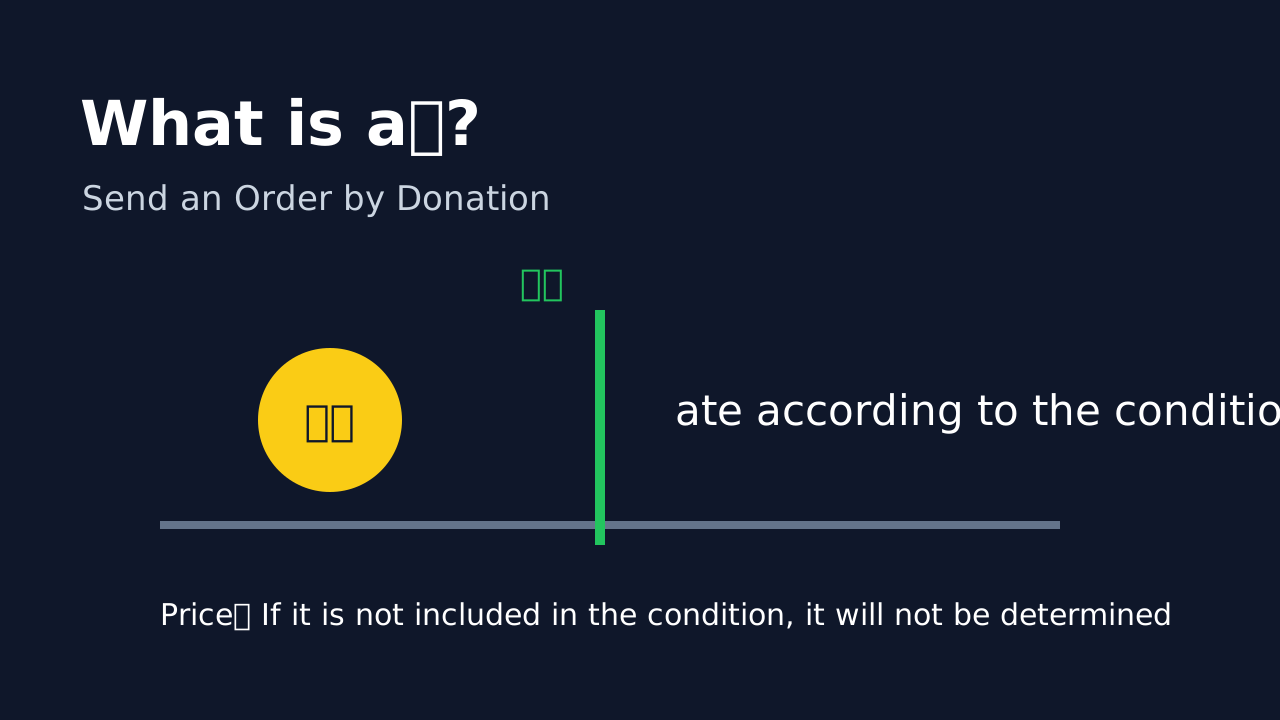
Donation is an order condition to place an order by.
to say
“In the first sale and sale of the start of the transaction, the order that is 、 to the specified price condition”
Home
If you don’t agree to the terms, then the order will expire.
Differences between finger values
Normal limit orders will be d if they are delivered to the price condition during the trading time.
On the other hand, donors will be donated.
| Order | Time to determine |
|---|---|
| 指値 | ution if conditions are met during trading time |
| 寄指 | If conditions are met by |
In other words, the donor has a time condition called "Donation only" to order the limit.
Used scenes
Donations are used in the following situations:
| Home | How to use |
|---|---|
| I want to buy with a but want to avoid値ing | You can decide the limit of the purchase value |
| I want to sell by but I want to avoid selling cheaply | The lower limit of the sale value |
| I want to aim only the first value | Don’t leave your order in Zara |
Used when you want to manage both the price and the timing.
メリット
The benefits of the donor can be compared to the price.
リスク consignment, it is easier to reduce the risk of ing at an unexpected price.
For example, if you want to buy 1,000 yen or less, you will get 1,000 yen of the buyer. If the is less than 1,000 yen, it may be d.
Notes
The biggest point of caution is that there is a possibility that it will not be accepted.
If the price of the does not reach the limit condition, the sale will not be established.
If you want to buy or sell。s, it is easy to understand if you want to protect the price.
This is a limit order for s.
The price can be specified, so it is easy to avoid high-value purchases and low-。 sales in。s, but it will not be 。d if it is not included in the condition.
For beginners, let's understand and use the differences between ing.