What is Sub-Business Prohibition?
Sub- is a rule that limits work and business activities other than the main business in the company's rules and internal rules.
The following activities are likely to be targeted:
| Activities | 内容 |
|---|---|
| Other companies | Part-time, part-time, contract employees, etc. |
| Business | Web production, video editing, writing, consulting, etc. |
| Business | Sales, store management, lecturer, freeス activities |
| SNS Monetization | Advertising income, Income, Affiliate |
| Investment Business | Paid salons, investment advice, materials sales, etc. |
In the past, there were a lot of companies that ban the sub-business in principle, with the idea that "the staff should be devoted to the main business".
It has changed a little. We are also a company that recognizes the スキルification of skills and income through sub-operation and concurrent business. However, the rules are quite different by the company. First of all, it is the work rules of your company.
How to think legally
This is a little misunderstanding.
It is not a simple rule that "the company is written as a side business prohibition, so it is absolutely prohibited for any side business".
The Ministry of Health, Labour and Welfare expresses the way of thinking that workers can freely use time outside working hours.
There are four typical cases where the company may pro。t or limit the sub-operation and concurrent business:
| Restricted cases | 内容 |
|---|---|
| Disability of labor provision | Impaired business by fatigue and long work |
| Secret Leakage | Customer information, technical information and management information leak outside |
| Search | Work with and compet services and harm company profits |
| 信用毀損 | Acts that damage the company's reputation and credit |
In other words, it is possible to find a problem with the main business, information management, competition, and credit rather than "the side business itself is absolutely bad".
Why the company restricts sub-operation
The reason why the company limits the sub-operation is pretty。.
Information leakage risk
The company includes customer information, technical information, price information, sales materials, and management information.
It will be a big problem if you use such information in the sub-business or personal business. If you are working in the same industry, even if you do not have a malicious intention, the boundary of know-how and customer information is ambiguous.
Special attention is required for IT, finance, R&D, sales, legal, accounting, and personnel.
Influence of Business
The sub-business uses time and physical strength while increasing revenue.
Improve the performance of your business when you have a shortage of sleep, long working hours, and reduced concentration. It is here to care about the company.
Work until midnight in a sub-operation and hinder the work of the next day. You can contact a sub-business while working. Use your company's PC or email. This will be a problem of working attitude before the side work.
Race
競ing the race is simply the idea of "do not harm the company's profit by competing with the company".
For example, it is easy to understand that the act of doing a competing business using the know-how gained by the company, selling their services to the customer of the worker.
If you are doing a sub-business, check whether you are working together, whether your customers are serious or not using company information.
Company Brand Protection
In the SNS era, personal communication may be linked to the company.
Even if you do not have a company name, you may be guessed from your profile or past post. Improper disse。, hype, flamenco commercial law, fraudulent solicitation will also affect the credit of the company as well as the individual.
Care is required to handle company names, shoulders, internal information, and customer information.
Is investment a sub-business?
This is where invest beginners are often wondering.
In general, NA, investment trust, ETF積umulation, and long-term ownership of individual shares are often treated as personal asset management rather than labor or business.
For example:
| Investment | View |
|---|---|
| Build investment trusts in Nを | Tag |
| Long-term ETF | AssetManagement |
| Returns dividends | Personal property management |
| Buy and Sell Shares with Specific Accounts | Asset Management |
There are not many companies that are prohibited by sub-businesses until the asset management of the normal range, as the company members make deposits or enter insurance.
However, in the following cases:
| Cases where caution is required | Reason |
|---|---|
| Day trading during working hours | Problems with business disability and job dedication |
| Working at financial institutions | In-house trading rules, conflict of interest, prevention of insider |
| Buy and Sell Shares | Possibility to touch unpublished information |
| Paid investment advice | Possibility to issue registration under the Financial Instruments and Exchange Act |
| Earn advertising revenue on investment SNS | You can be treated as a revenue business |
In other words, we consider long-term asset management and revenue business using investment.
Pay attention to taxes even if you are prohibited by side business
Tax confirmation is required when a sub-business income comes out.
In the case of an employee, it is divided into salary income, miscellaneous income, business income, etc. depending on the content of the sub-business income. The National Tax Agency shows cases where income related to sub-commissions such as refugees and sharing economy corresponds to miscellaneous income.
In addition, there are some people who worry about "when you are going to the company with resident tax" when the employees do a sub-operation.
In the final report, there is a section where you choose how to collect resident tax for income other than salary and public. In the creation corner of the National Tax Agency, there is a guide to enter the collection method of resident tax related to income other than salary.
However, what is important here is not to say, “If you choose a regular collection, you will definitely not know the company”.
Depending on the type of income, the processing of the municipality, the salary calculation of the company, and the content of the declaration, the handling changes. Tax declarations are to be paid correctly, not to hide them.
Easy to misunderstand for beginners
No problem because everyone is doing
This is dangerous.
Sub- rules vary by company. Even in the same content, one company may not be permitted by another company, or otherwise prohibited by another company.
In particular, there are strict rules for public officials, financial industry, IT confidential jobs, research jobs, medical and education.
It is okay if you are not
This is also dangerous.
The problem is not only whether it has been discovered. I used secret information and worked during working hours, and I was distracted by the business. If such damage occurs, it may be a story of disciplinary or damages.
The more you hide, the more you risk.
No matter what you invest
Normal asset management is difficult to handle sub-businesses.
However, short-term trading, unpublished trading, investment advisory business, and SNS posts are another problem.
Investment is not a sub-business, so I want to see the company’s internal rules and the rules on the Financial Instruments and Exchange Act without stopping them.
Safety checklist
Please check the following before starting a secondary business or investment-related activity.
| 項目 | Check |
|---|---|
| Employment Rules | Sub-operation, notification, permission, prohibited matters |
| 競 | Duplicate customers and know-how |
| Contact Us | We do not use customer information, technical information, and internal materials |
| Working hours | Overwork with the main business |
| Company | No company PC, email, chat, or materials |
| Taxes | Income classification, tax return, tax return |
| Contact Us | Pay attention to posts where you work or your customers are guessing |
In case of doubt, it is the safest to confirm that “This activity requires notification” to human resources and general.
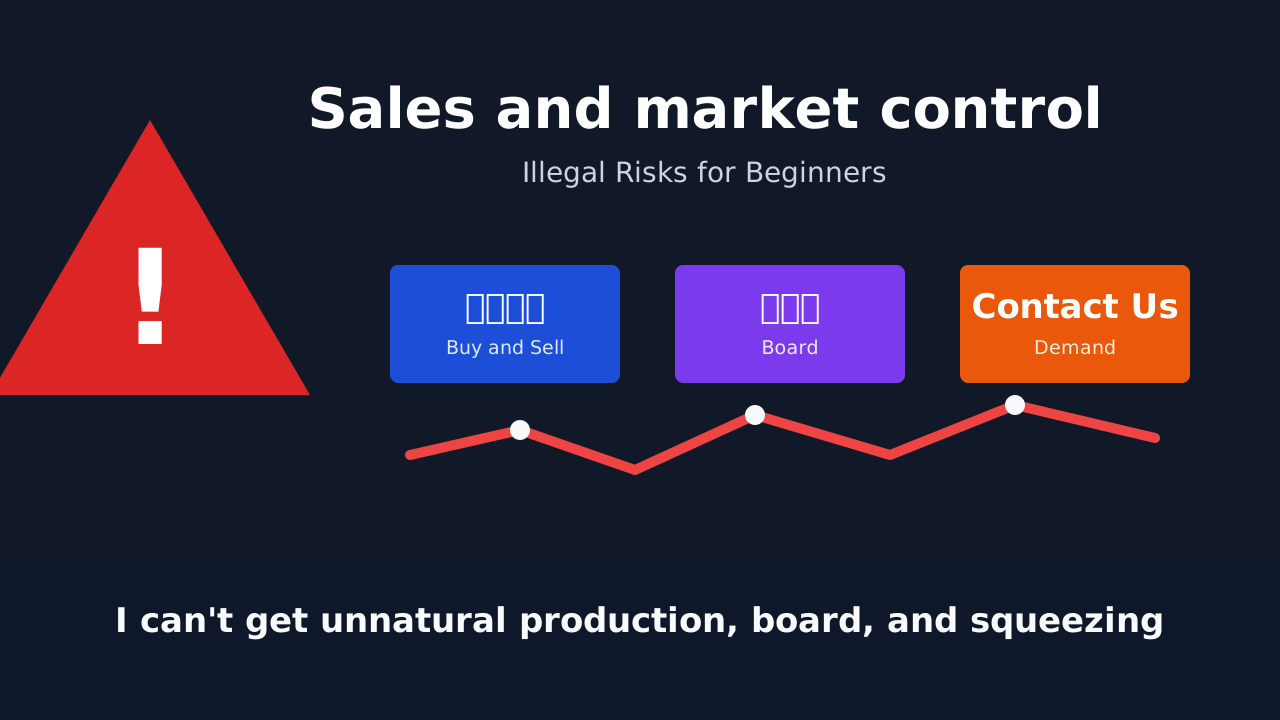
Figure: Four risks seen by banning sub-businesses

Sub-operation is a system in which the company can set up for risk management.
This includes prevention of information leakage, maintenance of business, avoiding competition, and protection of corporate brand.
However, in recent years, it has been arranged in the direction that limits the risk, rather than pro、ting sub-businesses and concurrent businesses. That’s why it’s important to check not only whether it’s a sub-business, but also whether it’s necessary to report and what’s。.
In terms of investment, general long-term asset formation such as NA, investment trust, and ETF積umulation is similar to personal asset management rather than sub-operation.
On the other hand, investment advice, investment salon, SNS monetization, day trade during working hours are different. Make sure to review corporate rules, taxes and compliance.
Reference
- Date: 2026-05-28