
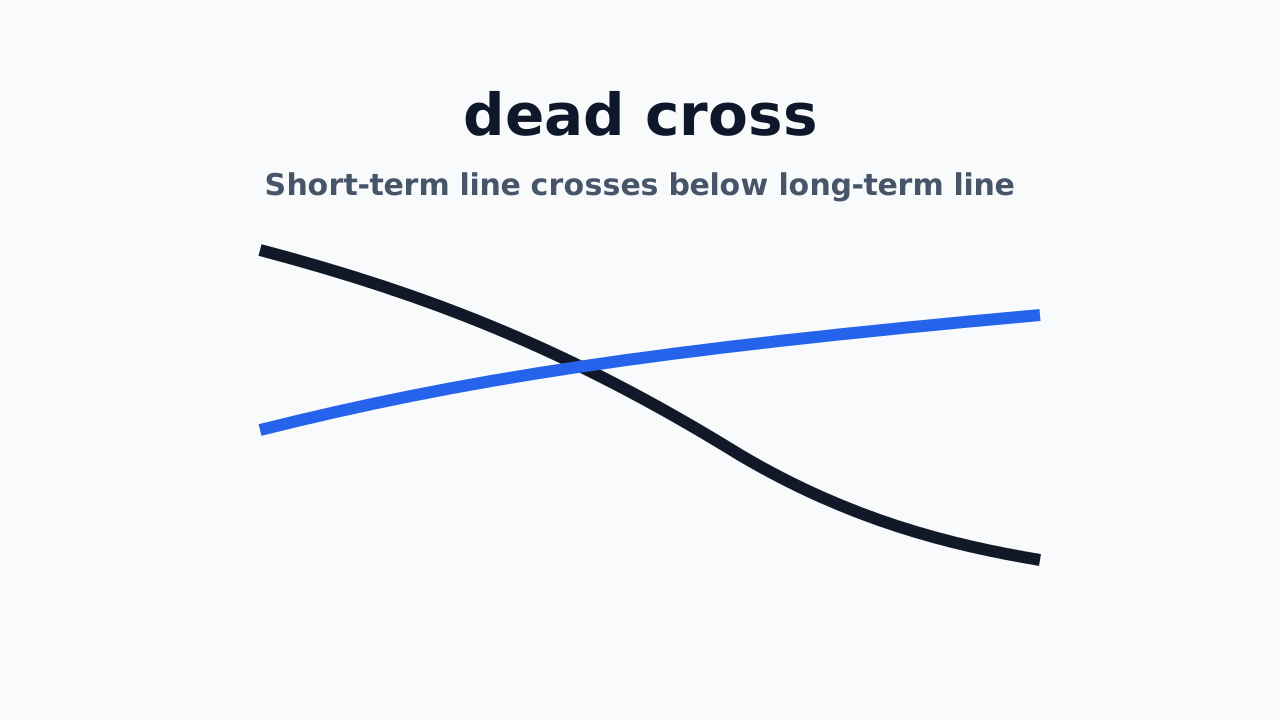
What is a dead cross?
A dead cross is the opposite form of a golden cross.
When the short-term line falls below the long-term line, it indicates that the recent stock price is weaker than the historical average.
Commonly used combinations include 5-day and 25-day lines, 25-day and 75-day lines, and 50-day and 200-day lines.
Why is it considered a sell signal?
When stock prices continue to fall, short-term moving averages tend to fall first.
When the short-term line crosses below the long-term line, the market sees that a downtrend may have begun.
Points to note
Dead crosses are also late indicators.
It may occur after the stock price has already fallen, and it may rebound immediately from there.
The points you want to check are as follows.
- Is it decreasing along with the trading volume?
- Is there a deterioration in performance or materials?
- Is the long-term line also pointing downwards?
- Is it breaking an important support line?
- Is the market as a whole in a weak situation?
Summary
A dead cross is a typical sign that confirms a downturn.
However, we do not make buying and selling decisions solely, but instead look at the materials, trading volume, and stock price position.