
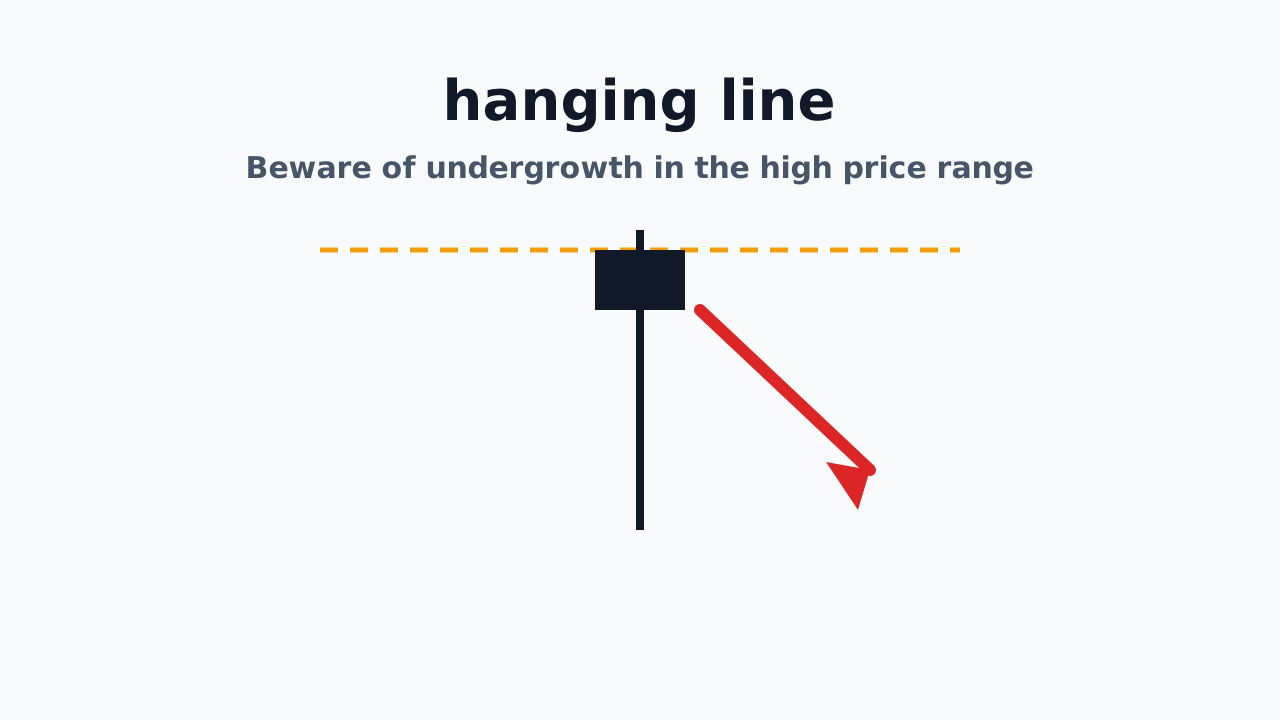
What is a hanging line?
A hanging line is a candlestick with a long lower whisker that appears at the high price area of a rising market.
At first glance, it looks like there is buying at the lower price.
However, there remains the fact that the stock was sold off heavily in the high price range, so the upward momentum may be slowing down.
Difference from Tonkachi
| term | place to exit | general view |
|---|---|---|
| Tonkachi | low price range | Expecting to bottom out |
| hanging line | high price area | Ceiling alert |
It's easy to make mistakes if you judge based on the shape alone.
Be sure to see where it comes out. It's more about the location than the shape.
How to use it
When a hanging line appears, instead of selling immediately, check the movement from the next day onward.
In particular, if a negative line appears or breaks below the support line the next day, the level of caution will increase.
If trading volume is increasing, profit-taking may be increasing.
Summary
A hanging line is a candlestick that indicates that the upward momentum may have weakened in the high price range.
In addition to looking at the shape, we also look at the appearance location, volume, and next leg. If a bottom line appears in the high price range, it not only indicates the strength of the purchase, but also the fact that there was a large selloff midway through.