
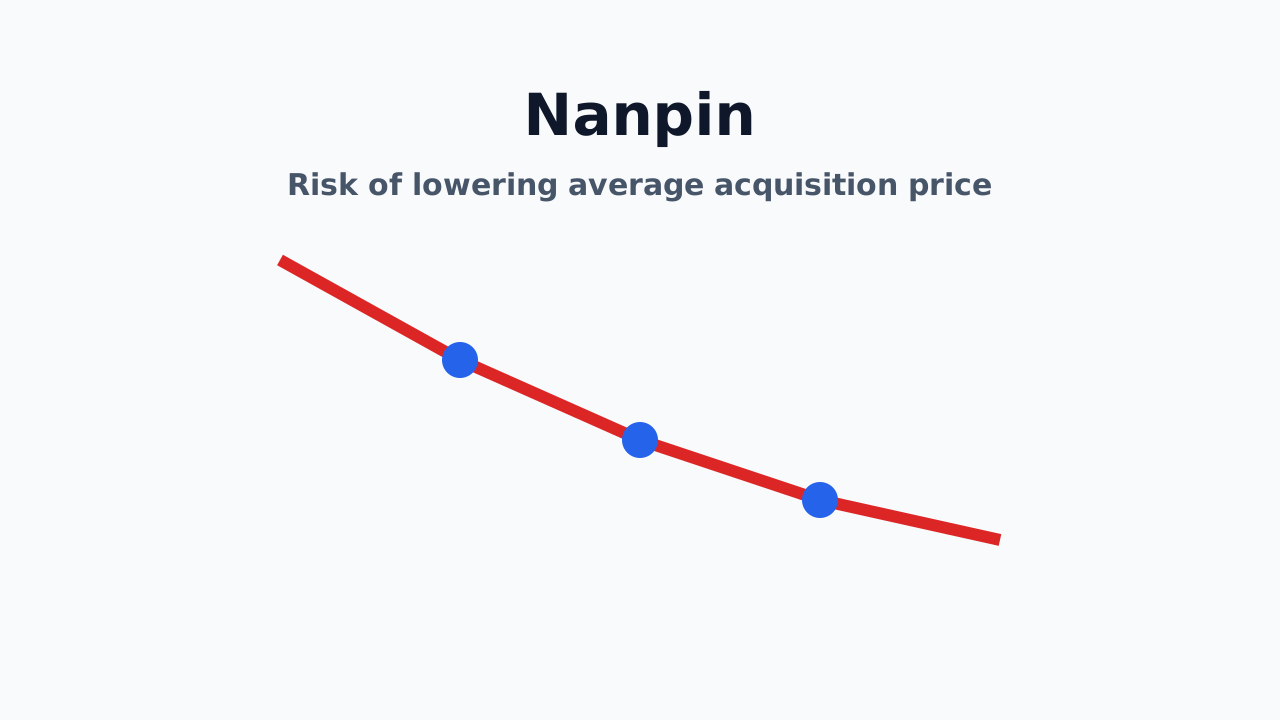
What is Nanpin?
Nampin is when the stock you bought goes down, you buy more.
For example, if you buy 100 shares for 1,000 yen and then 100 shares for 800 yen, the average acquisition price will be 900 yen.
If the stock price exceeds 900 yen, it will be easier to make a profit overall.
Advantages of Nanping
Nanpin has the following advantages:
- Lower average acquisition price
- The break-even point will be near when there is a rebound.
- Can be used as a buying strategy for long-term investments
However, this is only if the value of the investment has not collapsed.
Danger of picking up girls
Nanpin is dangerous if the reason for the decline is poor performance, scandals, or structural problems.
If you buy more every time the price goes down, your losses and position will increase.
This is a so-called "opening the wound" condition.
Things to check before picking up
Before considering Nanping, check the following points:
- Is the reason for investment intact?
- Is business performance deteriorating?
- Are there any financial problems?
- Have you set a limit on additional purchases?
- Have you decided on a stop-loss line?
Summary
Pick-up is a method that can increase losses if used incorrectly.
Beginners don't buy just because it's cheap, but make sure there's still a reason to invest before making a decision. If the reason for the decline is worsening, lowering the average unit price will not reduce the risk.