
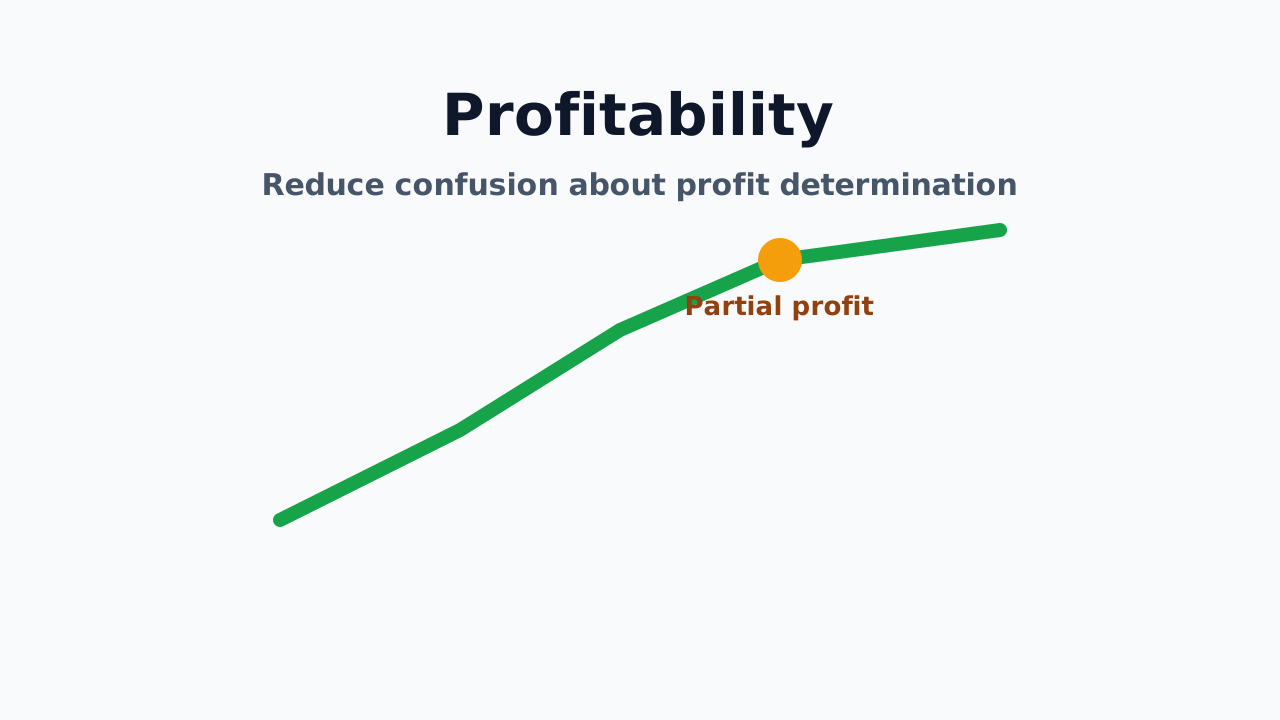
What is Ritsu?
Tokitake is an abbreviation for profit determination.
For example, if you buy a stock for 100,000 yen and sell it when it reaches 130,000 yen, you will have a profit of 30,000 yen.
It is an unrealized gain until you sell it, but it becomes a realized gain the moment you sell it.
Why is it difficult to make a profit?
The reason it is so difficult to determine the correct answer is that you can only know the correct answer later.
It would be frustrating if the price went up even more after selling.
On the other hand, when the price goes down without selling, you feel like ``I should have sold at that time.''
To reduce this hesitation, advance rules are necessary.
Example of profit taking rule
There are several ways of thinking about profit.
- Sell when target price is reached
- sell part and keep the rest
- Sell when it breaks below the moving average
- Fixed some profits before closing
- Sell when the investment reason is achieved
For beginners, some profit margins are easy to use.
Instead of selling everything or keeping it all, you can choose to sell half and grow the rest.
Points to note
If you take profits too early, you may miss out on big gains.
If you are too greedy, your unrealized gains may disappear.
It is important to have profit-taking rules that suit your investment period.
Summary
Profitability is an important decision to protect profits.
Rather than selling based on emotion, it will be easier to get lost if you create rules based on your goals, time horizon, and reason for investing.