
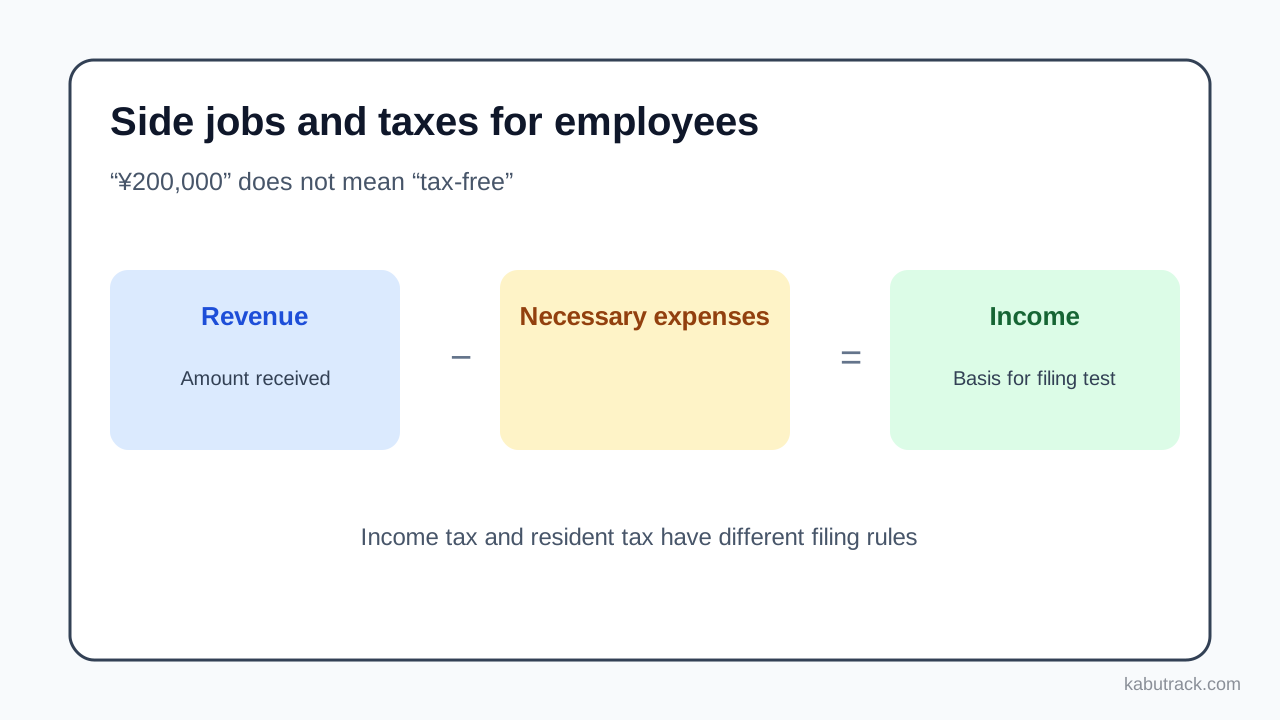
¥200,000 Is Not a Tax-Free Threshold
According to the National Tax Agency, an employee who receives a salary from one employer and whose salary is subject to year-end adjustment generally needs to file an income-tax return if income other than salary and retirement income exceeds ¥200,000, provided the other relevant conditions apply.
This does not mean the first ¥200,000 is untaxed. It is one condition under which an income-tax return may be unnecessary.
If you file a return for another reason, such as claiming a medical-expense deduction, you must include the side-business income too.
The Test Differs When the Side Job Pays a Salary
If you have an employment contract with your side-job employer and receive wages, those earnings are salary income.
For people paid by two or more employers, the filing test considers factors such as salary not subject to year-end adjustment together with income other than salary and retirement income. The rules differ from those for one salary plus contract-work income.
You cannot simply apply the “¥200,000 of non-salary income” test to a side job that pays wages.
Revenue and Income Are Different
For contract work or a sole proprietorship, the relevant figure is generally income after deducting necessary expenses from revenue, not revenue itself.
For example, ¥300,000 in revenue less ¥120,000 in necessary expenses gives a simplified income figure of ¥180,000. Whether a particular expense qualifies depends on its connection to the work.
Business Income or Miscellaneous Income?
The presence or absence of a business commencement notice alone does not decide whether side-work earnings are business income or miscellaneous income.
The National Tax Agency considers whether the activity is carried on to a degree that society would ordinarily regard as a business. The retention of books and records is also relevant to the classification.
Resident Tax Can Apply Even Below ¥200,000
A resident-tax declaration may be needed even when an income-tax return is not.
Saitama City explains that, in principle, an employee who does not file an income-tax return because side-work income is ¥200,000 or less still needs to declare it for municipal and prefectural resident tax. If you do not file an income-tax return, check your own municipality's resident-tax requirements.
When Can You Choose “Pay It Yourself”?
The National Tax Agency's online return-preparation service lets taxpayers choose between payroll withholding and “pay it yourself” for resident tax on income other than salary or public pensions.
Salary from a side-job employer is treated differently. Choosing “pay it yourself” also does not guarantee that your main employer will not learn about the side job.
Expenses and Books
People with business income, real-estate income, and certain other income are subject to bookkeeping and record-retention rules.
Even where side-work income is miscellaneous income, documents related to cash and deposit transactions must be retained if revenue from the relevant miscellaneous-income activities in the year before last exceeded ¥3 million.
Keeping monthly sales records, invoices, and receipts means you will not have to reconstruct a year's transactions when filing a return.
Conclusion
When filing season arrives, gather your withholding slips, sales records, and receipts. First establish whether the side job pays a salary or generates income from contract work or another activity. If you will not file an income-tax return, check resident-tax procedures with the municipality where you live.
Related Articles
- Part 5: How can an employee start a sole proprietorship?
- Part 7: How can you grow a side job into a business?
- Part 4: How can an employee start a side business?
Sources
- National Tax Agency: No. 1900, Employees Who Must File an Income-Tax Return
- National Tax Agency: People With Salary Income
- National Tax Agency: Article 35, Miscellaneous Income
- National Tax Agency: Bookkeeping and Record Retention for Individuals Operating Businesses
- National Tax Agency: Choosing How Resident Tax Is Collected
- Saitama City: Must I Declare Side-Job Income of ¥200,000 or Less?