
Read Your Employer's Rules Before Filing With the Tax Office
Being an employee and operating a sole proprietorship can coexist. If your employer requires notification or restricts competing work, you must address those procedures too. Filing a commencement notice with the tax office does not complete your employer's internal process.
Filing Deadlines When Starting a Business
Business Commencement Notice
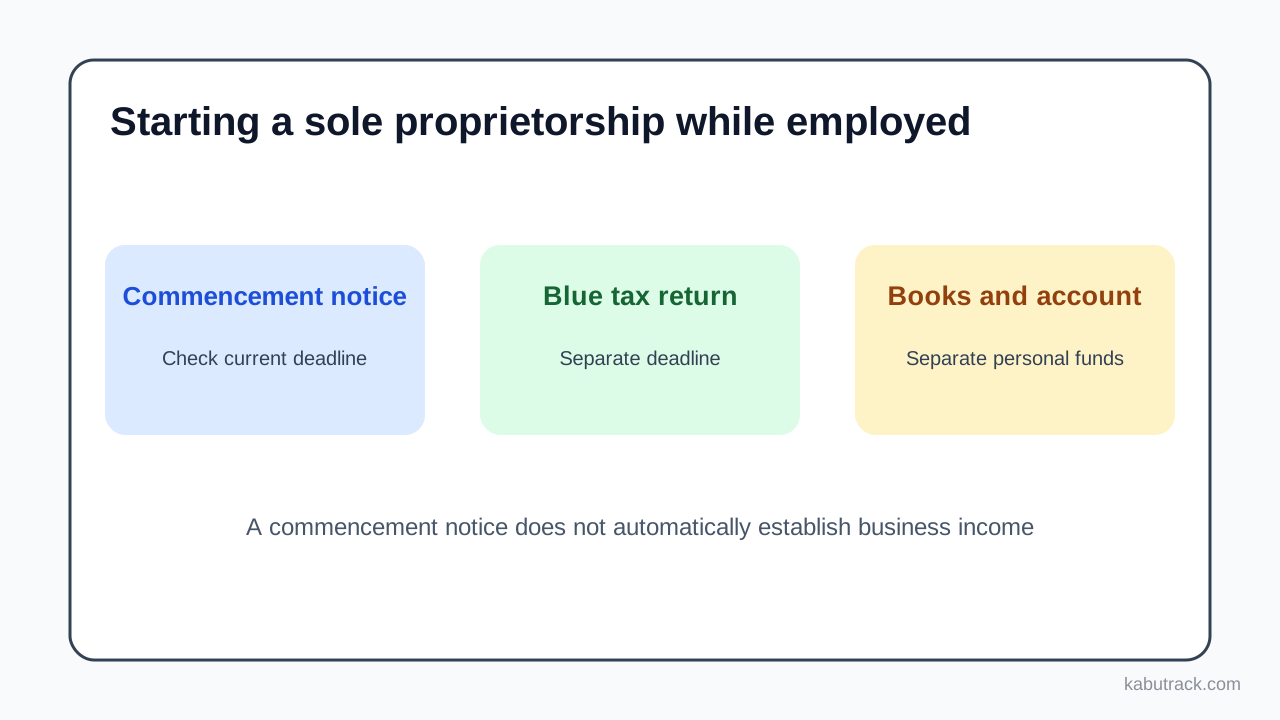
Under the National Tax Agency's guidance as of 2026, a person starting a business must file the “Notification of Commencement or Discontinuation of a Sole Proprietorship” by the income-tax return deadline for the year in which the business began.
Older explanations may say “within one month of starting.” Use the National Tax Agency's current page and form when you file.
Application for Approval to File a Blue Tax Return
If you wish to file a blue tax return, submit a separate application for approval.
The general deadline is March 15 of that year. If you start a new business on or after January 16, the deadline is within two months of the start date.
The commencement notice and blue-return application have different deadlines.
Local-Government Notifications
Separate from the national-tax commencement notice, some prefectures and other local governments require a notification when business begins.
In Tokyo, for example, the guidance says an individual starting a business must file a declaration for individual enterprise tax within 15 days of the start date. If you start outside Tokyo, check the relevant prefectural or municipal procedures as well.
You Can Decide on a Trade Name and Business Account Later
Trade Name
A trade name is optional.
You may use one if you want the same business name on invoices and your website. Choosing a trade name does not turn the business into a corporation; the legal person remains the individual.
Business Bank Account
There is no requirement to open a new bank account or card solely for the business.
Separating business receipts and payments from your salary account can save you from having to identify each side-business transaction in a mixed account when preparing your tax return.
A Commencement Notice Does Not Determine Income Classification
Filing a commencement notice does not automatically make side-business earnings “business income.”
The National Tax Agency says the classification depends in part on whether, by social standards, the activity is conducted to a degree that can be called a business. Keeping books and records also bears on the classification.
Conclusion
The commencement notice, blue-return application, and local-government notifications have different deadlines. A trade name and business bank account do not have comparable tax-application deadlines. Check the National Tax Agency's and local government's guidance when you file.
Related Articles
- Part 4: How can an employee start a side business?
- Part 6: Side-work income and taxes for employees
- Part 7: How can you grow a side job into a business?
Sources
- National Tax Agency: Starting a Business
- National Tax Agency: Procedures for Notifying the Start or Closure of a Sole Proprietorship
- National Tax Agency: Applying for Approval to File a Blue Tax Return
- National Tax Agency: Article 35, Miscellaneous Income
- Tokyo Metropolitan Government Tax Bureau: Starting or Closing a Business