
Record Contract Terms Before Accepting Work
If your side work is performed under a service contract, put the work, deadline, compensation, payment date, scope of revisions, rights to deliverables, and confidentiality terms in writing.
For transactions covered by Japan's Freelance Act, the client must disclose transaction terms. As a rule, the payment deadline must also be set as soon as practicable within 60 days of receiving the work.
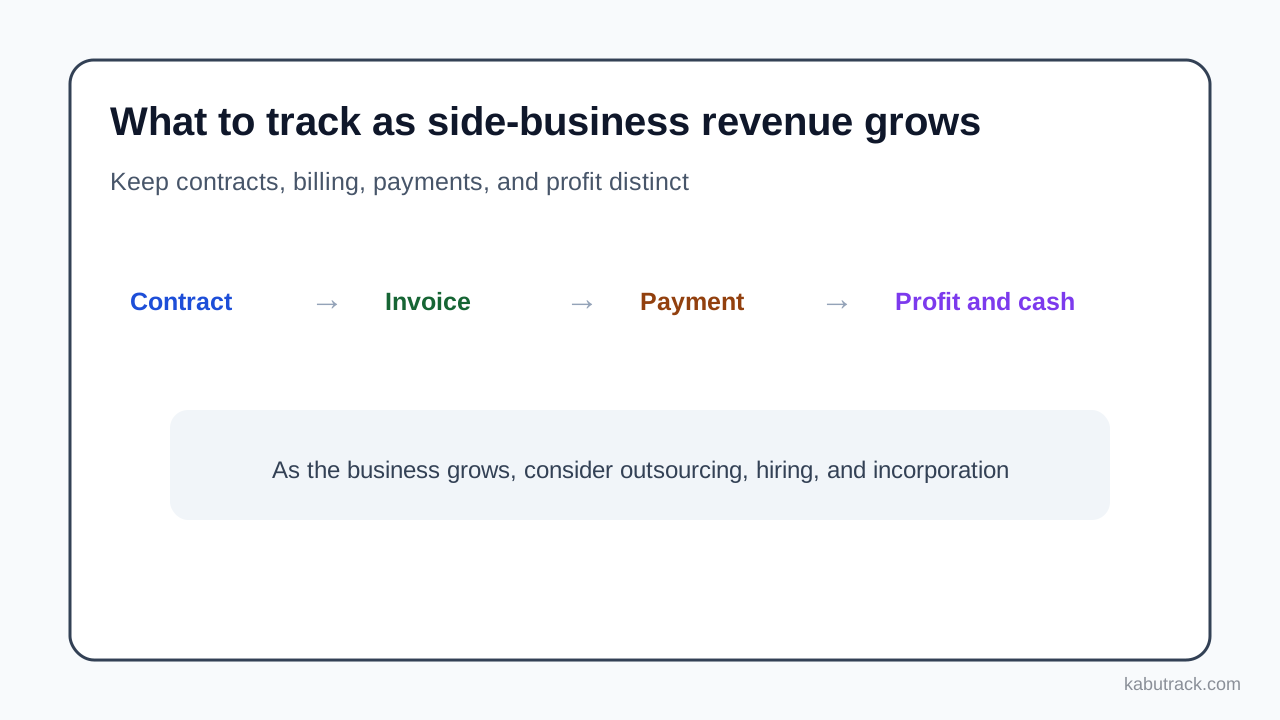
Revenue and Cash Received Are Different Figures
The date a sale is recorded and the date payment actually reaches your bank account may differ.
Even if you book a sale at month-end, a payment due at the end of the following month leaves you funding expenses with cash on hand in the meantime. A side business can run into cash-flow trouble if you treat all revenue as immediately spendable cash.
Track Profit Separately From Cash
If sales are ¥1 million but outsourcing, advertising, hosting, and other costs total ¥800,000, profit is ¥200,000.
Even with ¥200,000 in profit, that amount may not be in your account if receivables remain unpaid. Set aside funds for taxes and equipment investment as well.
Outsourcing Adds Obligations for the Client
When you begin outsourcing, you become the party commissioning work. For transactions covered by the Freelance Act, that brings obligations such as disclosing transaction terms and setting a payment deadline.
Hiring Employees Brings Labor Administration
Hiring employees means handling payroll and withholding taxes, labor insurance, and, where the conditions apply, social-insurance procedures.
Whether an arrangement is employment or contract work is not decided by the contract's label alone. Treatment depends on how the work is actually performed, including who directs it and controls working hours.
Factors to Consider Before Incorporating
There is no single nationwide revenue threshold at which a side business must incorporate.
Even at the same revenue level, the benefits of incorporating differ with profit margins, the presence of employees, and customers' requirements. Consider profit, staffing, social insurance, and customer terms together.
Forming a stock company or limited liability company also adds procedures that a sole proprietor does not face, such as preparing articles of incorporation and registering the company.
Conclusion
Revenue booked at month-end does not increase cash on hand if much of it remains unpaid. Outsourcing adds obligations as a client, while hiring adds employment procedures. Incorporation becomes a question to assess alongside profit, social insurance, and customer requirements at that stage.
Related Articles
- Part 6: Side-work income and taxes for employees
- Part 5: How can an employee start a sole proprietorship?
- Part 4: How can an employee start a side business?
Sources
- Japan Fair Trade Commission: Freelance Act Special Site
- Ministry of Health, Labour and Welfare: Guidance for Freelancers and Businesses That Commission Their Work
- National Tax Agency: Bookkeeping and Record Retention for Individuals Operating Businesses
- Ministry of Justice: Procedures for Establishing a Limited Liability Company