
What to Check First
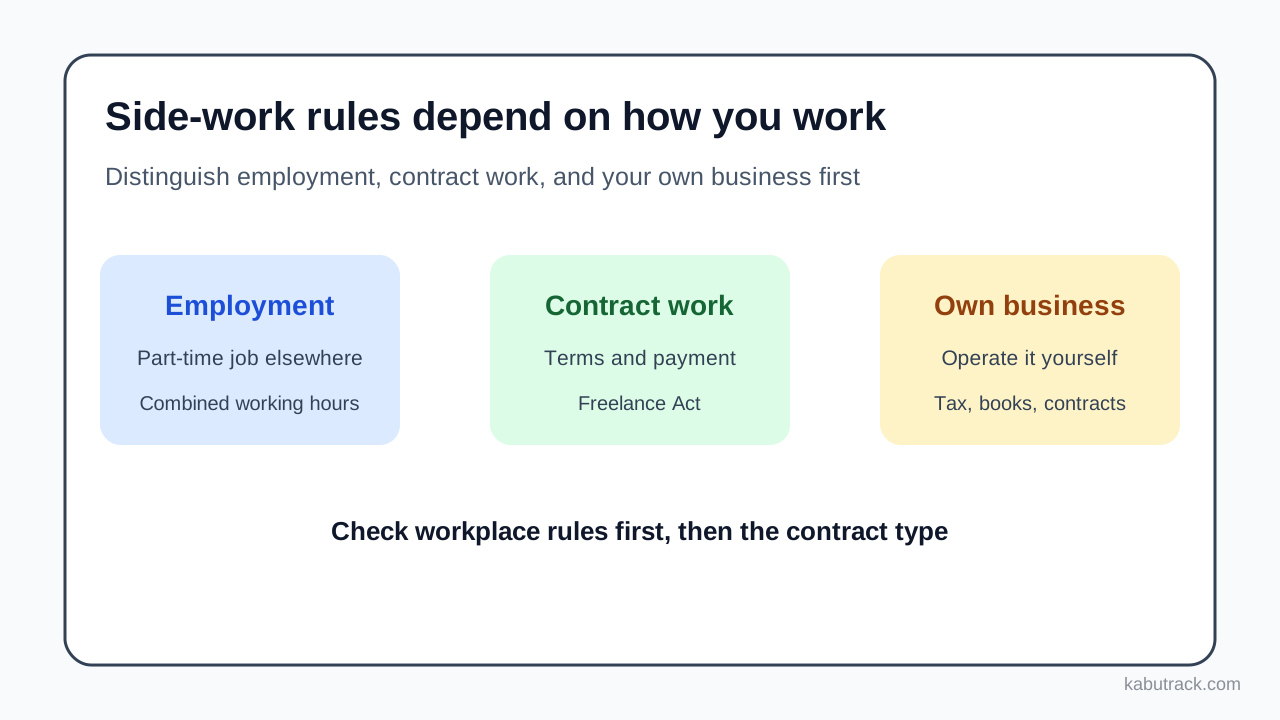
Start by finding the provisions on side jobs and multiple jobs, competition, and confidentiality in your employer's work rules. If notification or permission is required, complete that process before accepting work.
If the rules alone are hard to interpret, read the guidance from human resources or labor relations and the notification form as well.
What Is the Current Status of the Ministry's Guidelines?
The ministry created the guidelines in 2018 and revised them in September 2020 and July 2022. Its model work rules removed a provision that prohibited side work across the board and included provisions addressing side jobs and multiple jobs.
The model work rules are not your employer's rules. Actual notification procedures and restrictions differ by company.
The official page lists an explanatory pamphlet revised on March 31, 2025, along with a sample notification form, a working-hours management model, and a sample agreement. The model work rules are dated December 2025.
Employment, Contract Work, and Your Own Business Follow Different Rules
| Form | Typical example | Main issues |
|---|---|---|
| Employment | Employee at a main job plus a part-time job at another company | Combining working hours, overtime pay, health |
| Contract or freelance work | Employee at a main job plus contract work for a client | Contract terms, payment, Freelance Act |
| Self-employment or sole proprietorship | Employee at a main job plus a business of their own | Workplace rules, tax, books, competition, confidentiality |
When someone is employed by more than one company, working hours are generally combined. By contrast, hours worked as a freelancer, business owner, adviser, director, or in another capacity outside the Labor Standards Act are generally not included in that calculation.
Even if a contract says “contract work,” the treatment changes if the person is a worker in practice. The contract's name alone is not decisive.
When Can a Company Restrict Side Work?
The model work rules provide examples of situations in which side work may be prohibited or restricted:
- It interferes with performance of the main job.
- It leads to disclosure of trade secrets.
- Competition harms the employer's interests.
- It damages the employer's reputation, standing, or relationship of trust with the employee.
These four points are not an exhaustive statutory list of grounds for prohibition. Read the applicable work rules, employment contract, confidentiality terms, and competition restrictions at your employer.
What Changes With Contract Work or a Sole Proprietorship?
An employee who accepts side work under a service contract may qualify as a “specified entrusted business operator” under Japan's Freelance Act if the conditions are met.
In covered transactions, the client may have duties concerning disclosure of transaction terms and payment. Check compensation, deadlines, deliverables, intellectual-property rights, and confidentiality before signing.
Running your own business adds sales and expense records and tax-return obligations. Later articles in this series address starting a business and taxes separately.
The Seven Articles in This Series
- Part 1: What are the guidelines on side jobs and multiple jobs?
- Part 2: Can employees take on side work?
- Part 3: Are side-work hours combined with hours at your main job?
- Part 4: How can an employee start a side business?
- Part 5: How can an employee start a sole proprietorship?
- Part 6: Side-work income and taxes for employees
- Part 7: How can you grow a side job into a business?
Conclusion
Check your employer's rules first, then identify whether your side work is employment, contract work, or a business of your own. That choice determines which working-hour, contract, business-formation, and tax questions you need to examine.
Related Articles
- Part 2: Can employees take on side work?
- Part 3: Are side-work hours combined with hours at your main job?
Sources
- Ministry of Health, Labour and Welfare: Side Jobs and Multiple Jobs
- Ministry of Health, Labour and Welfare: Model Work Rules
- Ministry of Health, Labour and Welfare: Working Hours of Employees With Side Jobs or Multiple Jobs
- Ministry of Health, Labour and Welfare: Guidance for Freelancers and Businesses That Commission Their Work