
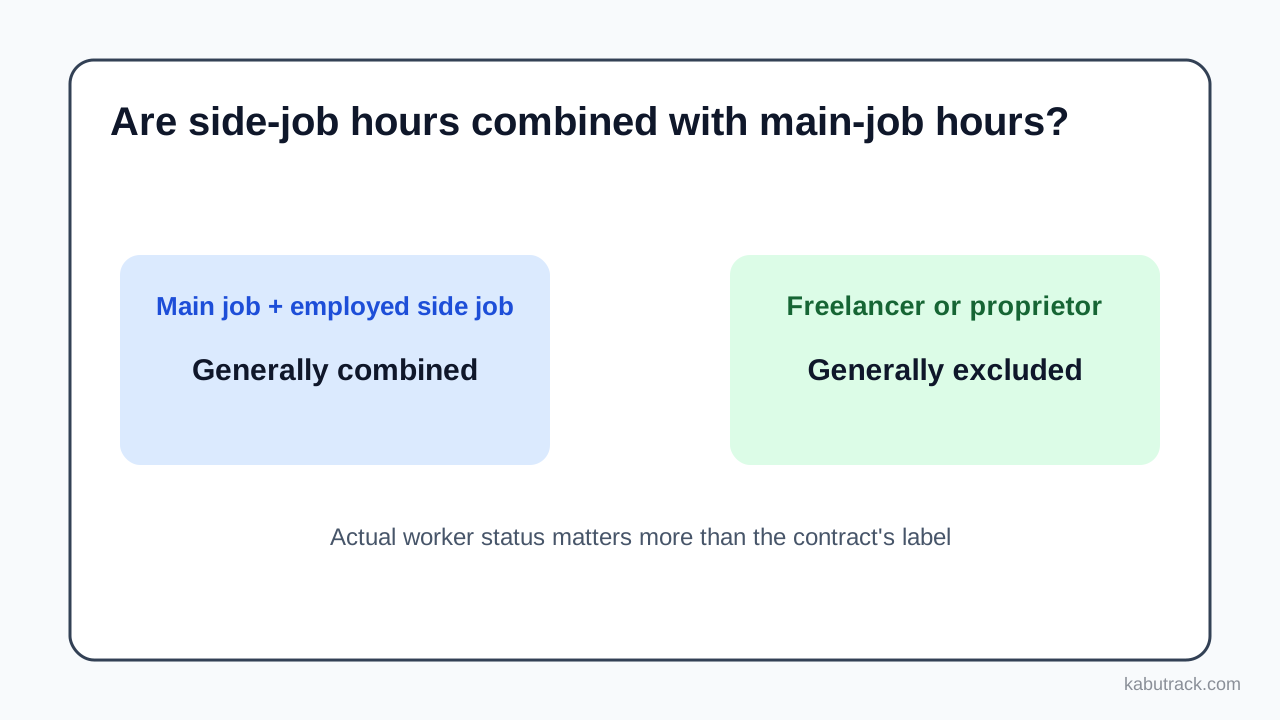
Main Job Plus Part-Time Employment: Hours Are Generally Combined
If you are employed by more than one company, working hours are generally combined even when the employers are different.
The employee's report is one way to establish hours worked at the side job. The main employer uses those hours when calculating statutory working hours and overtime premiums.
In What Order Are Hours Combined?
Under the standard method, scheduled hours are combined first, in the order the employment contracts were signed. Hours worked beyond the schedule, such as overtime, are then added in the order they were actually worked.
Hours exceeding eight a day or 40 a week after that calculation are statutory overtime. The employer for whom those overtime hours were worked must address the required Article 36 agreement and overtime pay.
For example, suppose Company A, whose contract was signed first, schedules six hours a day, and Company B, whose contract was signed later, schedules three. The hours are added starting with Company A. Of the nine hours in total, one hour worked at Company B is statutory overtime.
Freelance Work and Sole Proprietorships Are Treated Differently
Hours spent working as a freelancer, business owner, adviser, company director, or in another capacity not covered by the Labor Standards Act are generally excluded from the combined working-hours calculation.
An employee running a personal website at night and an employee working a three-hour shift at another company both have “side work,” but their hours are treated differently.
The Label “Contract Work” Is Not Decisive
Even if an agreement is labeled a contract for services, the person may be a worker in practice—for example, if the client directs the work and tightly controls its time and place.
Worker status is judged by how the work is actually performed, not just the contract's form or name.
What to Tell Your Employer About an Employed Side Job
The ministry's sample notification form asks about the side job's duties, type of contract, scheduled hours, and actual hours worked.
If reported hours are unclear, both employers may struggle to track statutory working hours. The ministry also publishes a “management model” intended to reduce the administrative burden.
Excluded Business Hours Can Still Affect Health
Employers need to consider more than whether statutory limits were exceeded. The combined demands of main and side work can also affect sleep and health.
Even if hours spent running a personal business are excluded from the legal calculation, working late into the night increases fatigue. Working-hours calculations and health management are separate issues.
Conclusion
If you start an employed side job, record hours at both workplaces and report them to your employers as required. Contract work is generally excluded from the combined-hours calculation, but the extra workload still calls for attention to health.
Related Articles
- Part 2: Can employees take on side work?
- Part 4: How can an employee start a side business?
- Part 1: What do the guidelines on side jobs and multiple jobs say?
Sources
- Ministry of Health, Labour and Welfare: Working Hours of Employees With Side Jobs or Multiple Jobs
- Ministry of Health, Labour and Welfare: Combining Working Hours Across Side Jobs and Multiple Jobs (Standard Method)
- Ministry of Health, Labour and Welfare: Side Jobs and Multiple Jobs
- Ministry of Health, Labour and Welfare: Guidance for Freelancers and Businesses That Commission Their Work