
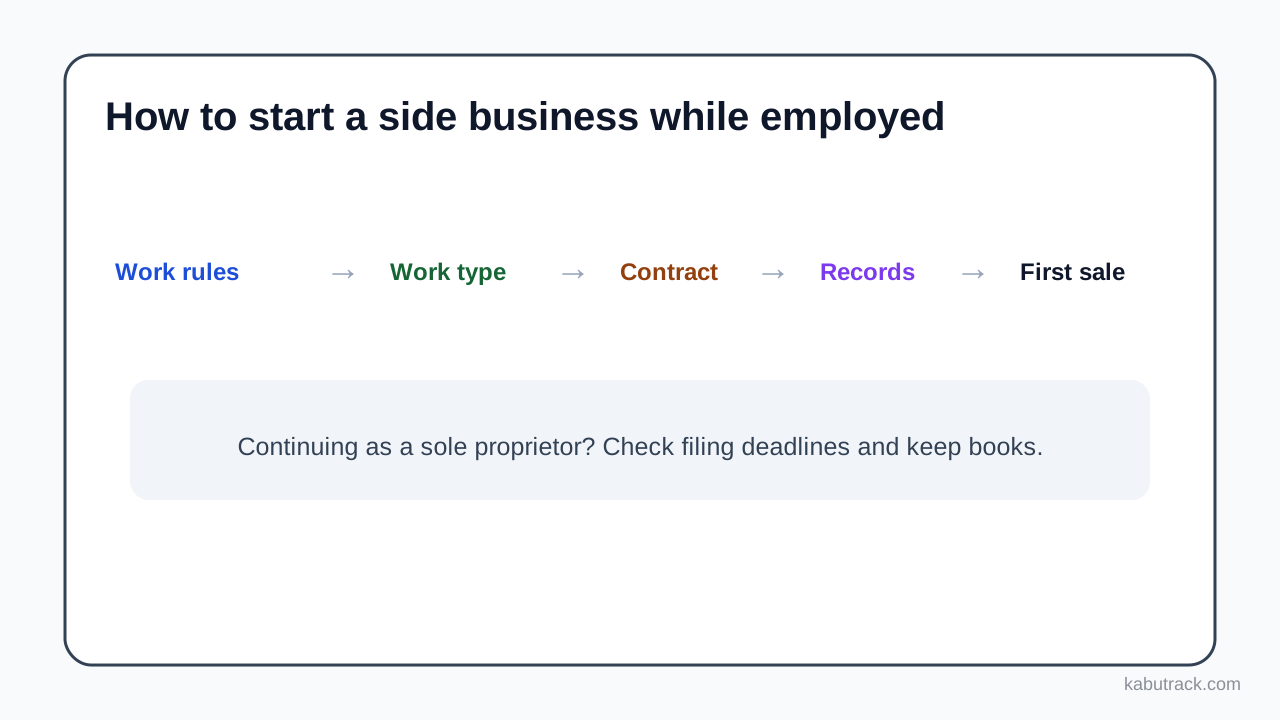
Read Your Employer's Rules First
Check your employer's side-work policy: whether you must notify the company or obtain permission, and what restrictions apply to competing work and confidentiality.
If you skip this step and accept a job, you may run into problems when notifying your employer after signing the contract.
The Next Steps Depend on the Type of Work
Next, distinguish among employment, contract work, and running your own business.
For a part-time job, the main issue is how working hours are counted across jobs. For contract work, focus on the agreement's terms. If you run your own service or website, you will also need to manage sales, expenses, and books.
Put the Terms in Writing Before Accepting Work
For contract work, record the scope of work, compensation, deadline, number of revisions, payment date, rights to the deliverables, and confidentiality terms in writing.
For freelance transactions covered by the relevant law, the ordering business may be required to disclose transaction terms. Obtain a purchase order, email, or another record you can consult later.
Track Sales and Expenses Separately From Day One
The law does not require a dedicated bank account or credit card for side work. Separating the account used to receive sales from the payment method used for expenses makes it easier to match statements to your books.
Save receipts and invoices by month and match them to the money received and spent.
What to Review After Your First Sale
For tax purposes, some calculations use *income*—sales less necessary expenses—rather than gross sales.
If you plan to continue as a sole proprietor, check the deadlines for filing a business commencement notice and applying for blue-return tax filing. Whether invoice-system registration is needed depends on your customers and sales circumstances.
Filing a Commencement Notice Does Not Automatically Make Income Business Income
Submitting a business commencement notice alone does not determine that your income is classified as business income. The fifth article on starting a sole proprietorship and the sixth article on side-work taxes discuss the income classification in more detail.
Conclusion
At a minimum, keep the relevant workplace rules, contract terms, invoices, and records of money received and spent. After your first sale, check the deadlines for the commencement notice and blue-return application, and complete the steps that apply to you.
Related Articles
- Part 3: Are side-work hours combined with hours at your main job?
- Part 5: How can an employee start a sole proprietorship?
- Part 2: Can employees take on side work?